

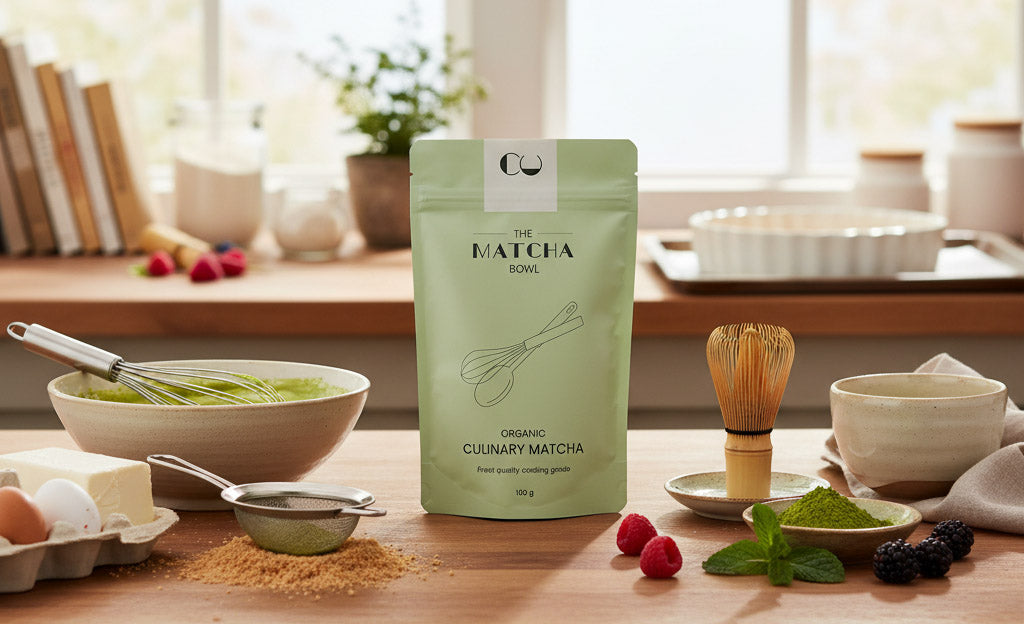
Matcha for cooking: when to use culinary matcha (and when not to)
When we think of matcha, we often picture a hot cup with green foam and a vegetal aroma. But matcha isn't just for drinking. In the kitchen, especially in baking and sweet recipes, culinary matcha is a magical ingredient: it adds color, flavor, character, and antioxidant benefits. However, not all matcha is suitable for cooking. Using ceremonial matcha in a cake can be wasteful (and an unnecessary expense). Therefore, if you're thinking of incorporating this Japanese superfood into your recipes, it's crucial to understand what culinary matcha is, when to use it, and how to get the most out of it in the kitchen. In this article from The Matcha Bowl, we'll tell you everything you need to know: the differences between culinary and ceremonial matcha, the types of recipes where it shines, how to store it, and what mistakes to avoid.
What exactly is culinary matcha?
Although many people believe that “matcha is matcha,” the truth is that there are several grades of quality depending on its use. Culinary matcha is specifically designed to be mixed with other ingredients in sweet and savory recipes. It is made with more mature leaves than ceremonial matcha and usually has a more intense flavor, with a certain bitterness and a less vibrant color, though if it is of high quality, it should not be yellowish. The important thing is that culinary matcha is still authentic, high-quality Japanese matcha , only adapted for gastronomic use. This makes it perfect for use in baking, smoothies, breads, ice cream, or even savory dishes such as sauces and dressings. Among its outstanding characteristics are:
- More affordable price (ideal for bulk use)
- Strong flavor that doesn't get lost among other ingredients
- Fine texture that dissolves easily
- Good stability when mixed with fat, sugar, or flours
In summary: culinary matcha is not of lower quality, it is simply another type of matcha, with another purpose .

When to use culinary matcha and when not?
Knowing when to use culinary matcha is just as important as knowing how. If you're feeling adventurous and want to experiment with recipes, this type of matcha can become your new best friend in the kitchen.
When to use it
You can use culinary matcha in:
- Cakes, cupcakes and muffins
- Cheesecakes, cakes and brownies
- Pancakes, crepes or waffles
- Shakes, smoothies or yogurts
- Ice cream, popsicles or mousse
- Cookies and energy bars
- Sauces, vinaigrettes and savory pastas (if you dare)
The key is to integrate it well and adjust the amount: ideally it's usually between 1 and 3 teaspoons per recipe, depending on the intensity you're looking for.
When NOT to use it
Avoid using culinary matcha for:
- Prepare traditional matcha in hot water (it becomes very bitter)
- Tea ceremonies or tastings
- Matcha latte with little milk (the flavor will be too harsh and bitter)
In these cases it is better to opt for a ceremonial matcha, which is milder, sweeter and more delicate.
Differences between culinary and ceremonial matcha
Choosing the right type of matcha can sometimes be difficult, especially if you're just starting out. Here's a clear summary of the main differences:
| Feature | Ceremonial Matcha | Culinary Matcha |
|---|---|---|
| Sheet type | More tender, young shoots | More mature, larger leaves |
| Flavor | Pleasant, Umami, sweet | More bitter and vegetal |
| Color | Very intense green | duller green |
| Price | Higher | More economical |
| Ideal use | Drink with water or milk | Recipes, baking |
Tip: There's a matcha for every occasion. Always keep one of each type at home. That way you can enjoy the ceremonial one in your cup and the culinary one in your recipes.
How to store matcha so it doesn't lose quality
Matcha, whether used ceremonially or in cooking, is a very delicate powder. If not stored properly, it quickly loses color, flavor, and properties. And if you cook with oxidized matcha, the result won't be the same. Tips for storing it properly:
- Store it in an airtight container , away from air and moisture.
- Avoid direct light , especially sunlight. Light degrades and oxidizes chlorophyll.
- Do not store it near the oven or fires , the heat accelerates its oxidation.
- If you buy it in large bags , transfer a small amount to an opaque container and store the rest in the refrigerator.
- Consume it within 3-4 months of opening (although it does not expire, it loses characteristics).
At The Matcha Bowl we send you the matcha in packaging that protects the product, but once you get it home, the rest is up to you.
Recipes where culinary matcha shines
Culinary matcha is an ingredient that transforms simple recipes into something sophisticated and original. Here are some ideas for using it with confidence:
In sweets:
- Matcha and date energy balls
- No-bake matcha cheesecake
- Matcha and almond cake
- Oatmeal cookies with matcha and white chocolate
- Chocolate brownie with a touch of matcha (it's spectacular)
- Coconut and matcha panna cotta
- Yogurt and matcha ice cream with black sesame topping
At breakfast:
- Overnight oats with banana and matcha
- Matcha and banana smoothie
- Spelt pancakes with matcha and maple syrup
- Green smoothie bowl with spinach, avocado and matcha
In savory recipes:
- Vinaigrette with sesame oil and matcha
- Homemade mayonnaise with a touch of matcha (ideal for wraps)
- Creamy green pasta with ricotta and matcha
Frequently asked questions about culinary matcha
Does culinary matcha have fewer benefits than ceremonial matcha?
Yes. Ceremonial matcha must be from the first harvest, which guarantees a higher content of chlorophyll, amino acids, and generally a greater number of nutrients. Furthermore, culinary matcha is usually cooked or mixed with other ingredients, and therefore some of its properties are reduced if it's overheated . But if you use it cold (smoothies, ice cream, creams), it retains most of its benefits. The important thing is to choose a high-quality, organic culinary matcha to ensure there are no residues or additives. If you're looking for flavor and maximum benefits, we recommend ceremonial matcha; if, on the other hand, you're looking for something more economical for recipes, culinary matcha is a perfect option.
Can I use ceremonial matcha for cooking?
Yes, but it's not necessary. The ceremonial version is more delicate, more expensive, and intended for drinks. When you mix it with sugar, butter, or flour, its flavor is lost, and you don't get to enjoy its distinctive notes and pleasant taste.
How much matcha should I add to a recipe?
It depends on the type of recipe, but usually it is:
- Smoothies: 2-3g
- Pancakes or muffins: 3g
- Large cakes or sponge cakes: 10-15g teaspoons
- Cookies: 5g teaspoons per batch
Remember that matcha has a strong flavor. Start with a small amount and adjust to your liking. If you add too much, it can become too bitter.
Does matcha lose its properties when cooked?
With high heat, yes. Some heat-sensitive catechins and vitamins degrade. But if you use matcha in cold recipes, or add it at the end of cooking, you can preserve many of its benefits . That's why we recommend using it in recipes that don't involve much baking or incorporating it after cooking, such as in toppings or creams.
Where can I buy quality culinary matcha?
In specialty stores that clearly indicate the type of matcha, its origin (preferably Japan), and that have organic certifications. At The Matcha Bowl, we select organic Japanese culinary matcha with a powerful flavor, vibrant color, and perfect texture for all kinds of recipes.